SpaceX Shares Surge After Musk and CFO Unveil Aggressive AI Spending and Revenue Forecasts
Following a strong quarterly report, Wall Street analysts sharply raised price targets for SpaceX, driven by new guidance on AI infrastructure spending and Starlink growth.
By Jonathan Pierce ·
SpaceX triggered a rapid reassessment of its valuation on Wall Street after reporting third-quarter 2026 results that significantly exceeded market expectations. Following the market close on October 20, the company revealed financial figures that prompted immediate upward revisions from major investment banks. The stock responded sharply in after-hours and early premarket trading on October 21, reflecting a sudden shift in investor sentiment toward the firm’s expanding business lines.
The primary driver for the price target hikes was the company’s explosive revenue growth. SpaceX reported total revenue of $14.6 billion, a year-over-year increase of 161 percent. This figure comfortably surpassed the consensus estimate, which hovered near $12.7 billion. Beyond the top line, the company swung from a loss in the same period last year to a net profit of $4.4 billion, with adjusted EBITDA reaching $8.8 billion. These metrics suggest a maturing business model capable of generating substantial cash flow.
A significant portion of this growth is attributable to the company's Super Intelligence division, which generated approximately $7.6 billion in revenue. This segment became the largest contributor to the company's total income, posting a near 830 percent year-over-year increase. Meanwhile, the Connectivity segment delivered $5.2 billion in revenue, driven by strong subscriber additions that expanded the Starlink consumer base to 13.6 million users. The combination of these two high-growth areas appears to be reshaping analyst perceptions of the company’s long-term earnings power.
The earnings call proved particularly influential in driving the stock price higher. CEO Elon Musk and CFO Bret Johnsen provided first-quarter 2027 revenue guidance ranging from $33 billion to $37 billion. This projection was substantially higher than the approximately $22 billion that analysts had previously modeled. Additionally, management outlined fourth-quarter capital expenditure plans of $35 billion to $40 billion, with a specific focus on AI compute infrastructure at locations including Memphis and Southaven. The scale of this spending has raised questions about capital allocation efficiency, even as it signals aggressive expansion.
Management indicated that they aim to reach 2.5 to 3 gigawatts of nameplate compute capacity by the end of the year, with pathways to 13 gigawatts or more by the end of 2027. Musk cited relentless demand from hyperscalers and other customers, noting that current compute pricing supports payback periods of less than a year and potentially as short as six months. These comments suggest that the company believes its AI infrastructure investments will yield rapid returns, a claim that analysts are now scrutinizing against the backdrop of the massive capital outlays planned.
In response to these figures, a wave of price target increases swept through the analyst community. JPMorgan more than doubled its target to $500 from $240, maintaining an Overweight rating. Cantor Fitzgerald raised its target to $345 from $246, also with an Overweight rating. Barclays increased its target to $300 from $254, while Morgan Stanley held an Overweight rating with a $300 target. Citi raised its Buy rating target to $240 from $200, and UBS moved its Buy target to $230 from $210. TD Cowen also adjusted higher, setting a Buy target of $224 from $200.
Other firms joined the upward revision trend, including Wells Fargo, which raised its target to $274 from $214, and Clear Street, which increased its target to $248 from $217. Analysts broadly cited the strong quarterly performance, the accelerating AI compute expansion, Starlink progress, and recent Starship milestones as key drivers for these higher long-term growth projections. The consensus appears to have shifted decisively toward a bullish outlook, despite the elevated spending levels.
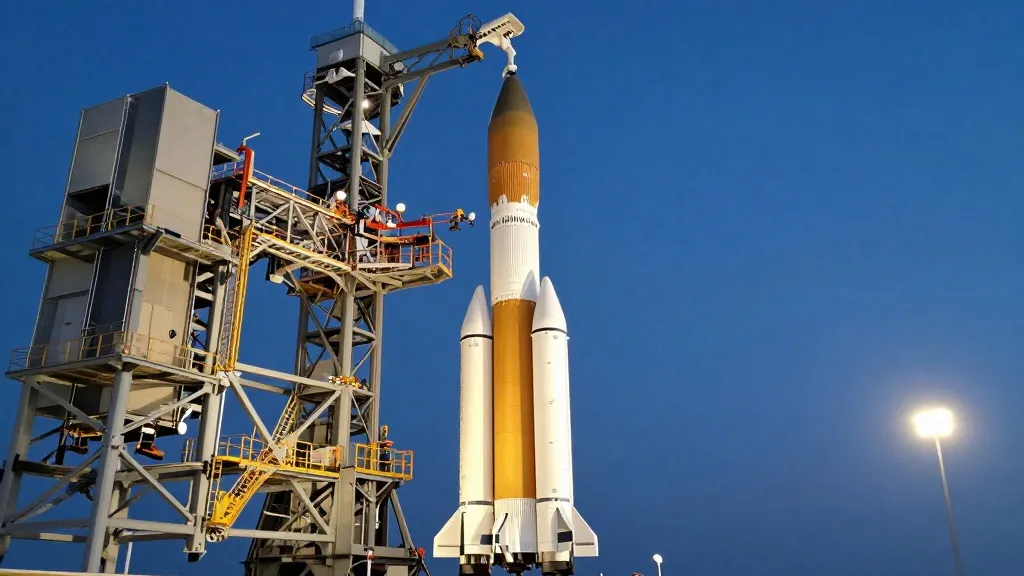
Additional operational highlights included Starship’s recent orbital success and the deployment of V3 satellites, alongside continued momentum in Starlink pricing and enterprise adoption. The company also noted rapid adoption of Grok Bot and plans for spectrum expansion. Notably, special committees were formed to explore a possible combination with Tesla, a development that may further influence future strategic decisions. These elements, combined with the financial results, have created a complex narrative for investors.
Shares of SpaceX, which closed at $147.79 on October 20, jumped roughly 8 percent in early premarket trading on October 21 as investors digested the results and the newly elevated Street targets. The average analyst price target has moved higher, reflecting greater conviction in the company’s trajectory across launch, connectivity, and the Super Intelligence business. However, the significant increase in capital expenditure remains a point of focus, with investors closely watching how efficiently these funds will be deployed in the coming quarters.
Source: Teslarati