Trump Arch Plan Faces Legal Hurdles
Federal judges have temporarily blocked the construction of a proposed 250-foot arch near Arlington National Cemetery.
By Larissa Mensah ·
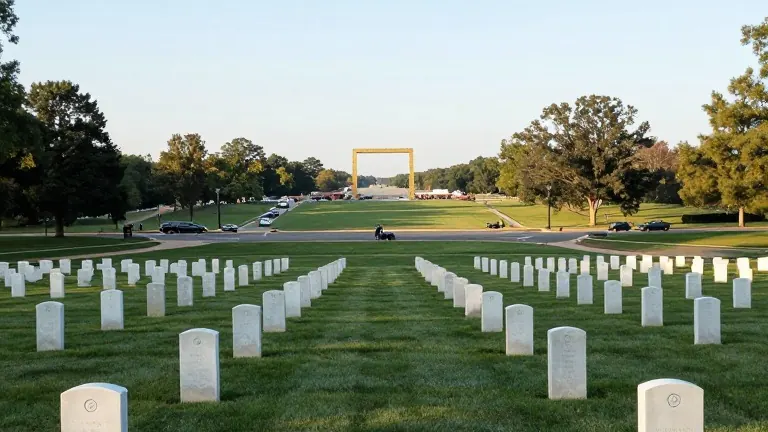
Construction crews will not break ground on the new memorial arch near Arlington National Cemetery just yet. Federal judges in the District of Columbia and Virginia issued temporary blocks on the project. This pause gives opponents time to argue their case in court before any heavy machinery enters the site.
The proposed structure is a gold and granite arch standing 250 feet tall. That makes it taller than the Lincoln Memorial. President Donald Trump has pushed for the build as part of a wider renovation of Washington, D.C. The site is a traffic circle located about half a mile from the main entrance to the cemetery.
Critics say the arch will change the historic landscape. They argue it will cast long shadows over graves and disrupt the quiet atmosphere of the burial grounds. The cemetery holds more than 430,000 people. Dozens of new interments happen every week. The site includes the remains of two presidents, more than 400 Medal of Honor recipients, and military personnel from every U.S. war dating back to the Revolutionary War.
Bart Collart, father of Cpl. Spencer Collart, opposes the project. His son was a Marine crew chief who died in August 2023 during a V-22 Osprey crash in Australia. Collart was 21 years old. He died after re-entering the burning aircraft to try to save his pilots. His father says the arch would dirty hallowed ground and act as a loud marketing tool for an ego.
Micki McElya, a historian at the University of Connecticut, describes the cemetery as the most hallowed ground in the United States. She notes that the area is a living record of the nation’s history, including its complexities. She warns that the current push for the arch does not fully credit the weight of the sacrifice represented by the uniformed headstones.
Supporters of the arch point to a 1925 congressional mandate to add a monument to the traffic circle. Jared Craig, general counsel for Veterans for America First, argues the project completes a long-standing plan. He states that the arch will honor veterans and that the construction will not require any changes to the cemetery itself.
Jimi Shaughnessy, a veteran and program manager for the National Parks Conservation Association, disagrees. He visits the graves of his great-grandparents regularly. He values the open, quiet, and peaceful setting of the cemetery. He fears that the noise of major construction and the traffic from a new tourist attraction will intrude on that peace. He also worries about a looming dark shadow falling over the graves during the day.
The White House defended the project through spokesman Davis Ingle. He said the arch serves as a visual reminder of the noble sacrifices made by American heroes over 250 years. The administration views the structure as a gateway connecting the capital to Arlington. The legal battles continue as both sides present their arguments to federal courts.
During a recent 10-hour hearing, a planning commission approved the arch despite public opposition. Bart Collart spoke at that hearing. He asked commissioners to do the right thing and oppose the president’s wishes. He pointed to the rows of simple white headstones across the road and asked for respect for the uniform his son died in. More than 100,000 public comments on the project favored opposition to the build.