Corpus Christi Drills 20 Wells Amid Dispute
City officials fast-tracked permits for a massive groundwater extraction plan while rural residents fear a loss of access to water.
By Neha Wang ·
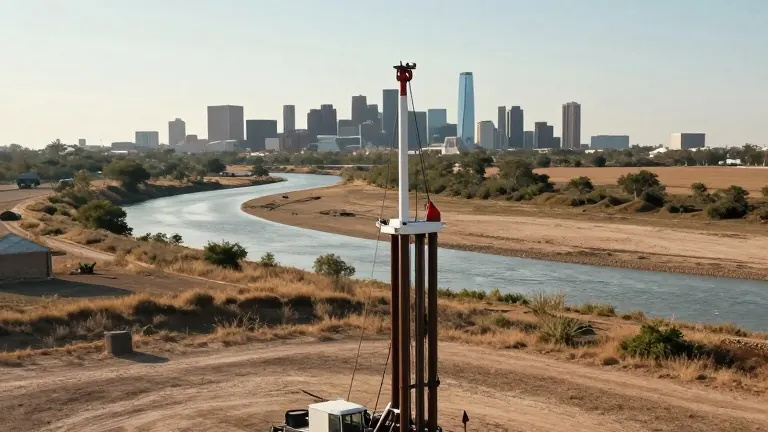
Corpus Christi officials approved permits for 20 new wells, allowing the city to pump up to 40 million gallons of water daily.
The Texas Tribune and KRIS 6 found that the Corpus Christi Aquifer Storage and Recovery Conservation District fast-tracked the permitting process. This entity, whose board is appointed by the City Council, has approved every city request to drill more wells since last fall. The district overlooked specific safeguards required by its own rules to protect other well users.
Rural residents formed a new groundwater conservation district to regulate drilling and limit the city's intake. They feared the city's aggressive pumping would threaten their water supply. In response, city officials asked the existing storage and recovery district to expand its boundaries to include the city's well fields outside city limits. This move allowed the city to maintain control over the regulatory process.
A city-commissioned study released this summer projected that the drilling plan could cause land around the wells to sink by 20 inches over the next 30 years. The study also estimated that water levels in nearby rural wells could drop by up to 100 feet within five years. City officials stated that these figures are projections and do not reflect the city's average daily pumping rate, which is less than a third of the permitted maximum.
Drew Molly, former chief operating officer of the city's water department, called the pumping volume in such a small area unfathomable. He is now the chief water officer at Houston's water department. Molly warned that the district's rapid approval of permits will cause ripple effects across the state. Groundwater experts note that aquifers need rain and time to refill, and excessive pumping can permanently reduce their capacity.
Corpus Christi leaders defended the arrangement in a written statement. Ashley Marion, strategic business manager for the city water department, said there is no conflict of interest. She noted that city employees involved with the district have no personal or financial interest in permitting decisions. The city tracks water levels and adjusts pumping rates based on daily data and long-term modeling.
Robert Mace, executive director at Texas State University's Meadows Center for Water and the Environment, described the setup as the fox guarding the henhouse. He argued that the district looks out for Corpus Christi's interests rather than those of other affected landowners. This view is shared by at least one of the storage and recovery district's own board members and an outgoing state lawmaker.
The city's reliance on groundwater stems from a near-crisis in 2024 after years of drought. The city currently relies on three drought-vulnerable reservoirs for most of its supply. A divided City Council has twice declined to move forward with a desalination plant since 2025, despite state approval for $757 million in loans. Outgoing Gov. Greg Abbott criticized the leaders for failing to secure reliable water.
John Michael, an engineer involved in the city's water projects, recalled that drilling along the Nueces River was always intended as a temporary solution. He wrote in a June 26 memo that he never envisioned the wells being used for anything other than emergency supply. The city now calls the groundwater program a key component of its strategy to diversify the region's water supply.
Scott Barraza, who lives on 20 acres about 20 miles from downtown, recently purchased a $9,000 water purification system and a trailer to haul water. He and his family, including his wife Julie and daughter Grace, rely on these measures to maintain their water supply. The city has not fully satisfied some permit requirements nine months later, according to a document prepared by two district board members.