Apple's iPod Turns 25: How a 5GB Device Reshaped the Music Industry
Two decades after its 2001 debut, the original iPod remains a pivotal moment in tech history, bridging the gap between desktop computing and portable entertainment.
By Thomas Reynolds ·
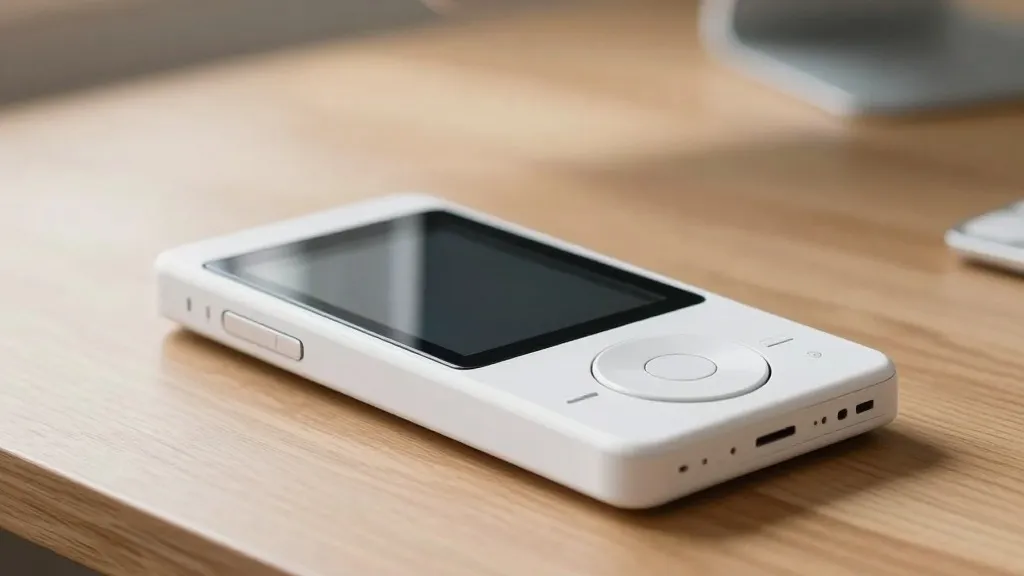
On this day in 2001, Apple CEO Steve Jobs stepped onto the stage to unveil a device that would fundamentally alter how consumers interacted with music. The tension of the moment lay in the market’s skepticism; while portable digital players existed, none had achieved mass adoption. Jobs introduced the original iPod not just as a gadget, but as a 'breakthrough digital device that’s not a Mac,' positioning it as the next step in Apple’s revival strategy. For $399, the company promised to put an entire music library into a user's pocket, a claim that would define the product's legacy for the next two decades.
The launch occurred at a critical juncture for Apple. Having successfully navigated the company out of the post-dot-com bubble slump, Jobs had established the Mac OS X era with successful products like the iMac and iBook. The CEO envisioned the Mac as the central hub of a user's digital lifestyle, connecting cameras, camcorders, and DVD players. Music was identified as the ideal entry point because it was a universal passion with a massive target market that lacked a dominant leader. By choosing a hard disk-based jukebox player over other existing formats like CD players or flash-based devices, Apple aimed to offer superior storage capacity and functionality.
The technical specifications of the original iPod were designed to solve the primary pain point of the era: storage. With 5 gigabytes of capacity, the device could hold 1,000 songs, specifically defined as typical pop tracks encoded at 160Kbps. This was a significant leap for a portable device at the time. Jobs emphasized that for most consumers, this capacity effectively represented their entire musical collection, eliminating the need to constantly swap discs or manage complex file structures on multiple devices.
Achieving this capacity in a portable form factor required a specific hardware partnership. The iPod utilized a 1.8-inch, 0.2-inch thick hard drive from Toshiba, which was ultra-compact and thin. This allowed the final device to measure 2.4 by 4 by 0.78 inches and weigh just 6.5 ounces, making it lighter than most cell phones of that period. The design was described as minimal and durable, with a form factor comparable to a deck of cards. This portability was a key differentiator, ensuring the device was desirable enough to carry daily, a habit that would become second nature for millions of users.
Beyond storage, the device offered advanced features that were rare for the time. It supported CD-quality sound and played popular formats such as MP3, WAV, and AIFF. A single FireWire 400 cable handled both charging and data transfer, a connection that was significantly faster than the USB standards prevalent in 2001. Jobs claimed that transferring an entire CD of music took only five to 10 seconds via FireWire, whereas USB connections required around five minutes for the same task. Filling the device with 1,000 songs was estimated to take 10 minutes, compared to five hours for competing USB players.
The user experience was central to Apple’s marketing narrative. The iPod featured a specially designed scroll wheel with a piezoelectric clicker that provided tactile feedback, allowing for fast navigation by artist, playlist, or song. This single-hand-friendly control system was lauded for its ease of use, a hallmark of the Apple brand. The device also included 20-minute skip protection and a rechargeable lithium-polymer battery that offered 10 hours of continuous playback. An empty battery could be recharged to 80 percent in just one hour, ensuring that downtime was minimal for active users.
The launch was also a strategic move for Apple’s software ecosystem. iTunes 2 was released on the same day, featuring advanced capabilities like MP3 CD burning and, most importantly, Auto-Sync. This feature ensured that any library created or customized on a Mac was automatically synchronized with the iPod whenever the device was connected for charging or transfers. The iPod also functioned as a FireWire hard disk drive, adding versatility to its primary role as a music player. The integration of hardware and software created a seamless loop that locked users into the Apple ecosystem.
The first iPhone did not arrive until early 2007, meaning the iPod stood alone as Apple’s portable entertainment flagship for over five years. For more than a decade, both devices coexisted in the company’s product lineup. However, the rise of the smartphone inevitably led to the iPod’s decline. The final model, the 7th-generation iPod Touch, was released in May 2019. Although the product line was left unmaintained after that point, Apple officially discontinued the iPod in May 2022, marking the end of an era that began with a simple promise: 1,000 songs in your pocket.
Source: Tom's Hardware