Angola Prison Rodeo Offers Redemption for Inmates
At the largest maximum security prison in the U.S., volunteer inmates perform in a rodeo that provides a rare sense of freedom and purpose for men serving life sentences.
By Larissa Mensah ·
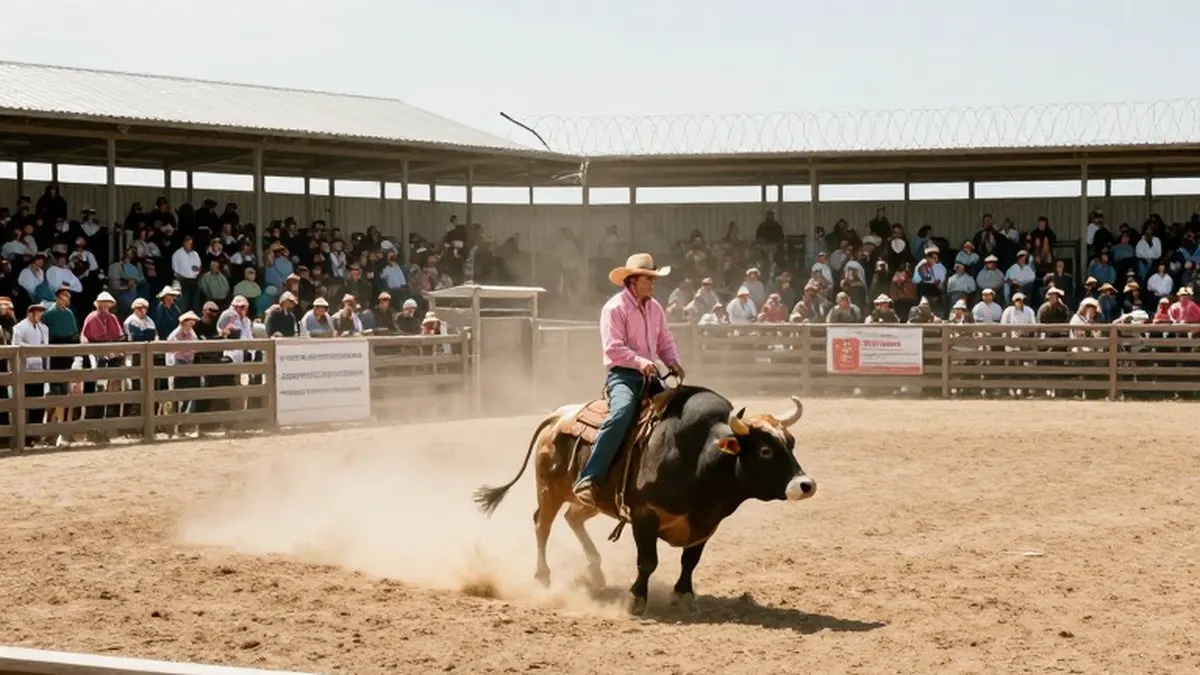
The Louisiana State Penitentiary, widely known as Angola, is the largest maximum security prison in the United States. Located at the end of a 20-mile road that terminates at the Mississippi River, the facility houses nearly 5,000 men. Most of these inmates are serving life sentences and are expected to spend their final days within its walls. While the environment offers little room for hope for the general population, approximately 1,000 inmates have earned privileges through good behavior. These privileges include driving tractors, breaking horses, and learning trades. For the most courageous among them, the reward is participating in the prison's annual rodeo, often described as the wildest show in the South.
The rodeo takes place during one weekend in April and on Sundays in October. It draws thousands of spectators who watch as inmate cowboys compete in events like bull riding and bareback riding. Kevin Gildhouse, known as Country, was sentenced to life without parole almost 20 years ago after being convicted of killing a cab driver during a robbery at age 19. For Gildhouse, the rodeo represents a fleeting escape from his reality. He notes that during those few hours, the barriers of prison disappear, and he feels a sense of camaraderie with other inmates who are competing and enduring the physical toll together.
Angola has a complex history that began as a slave plantation. It earned the reputation of being the bloodiest prison in America due to widespread torture and violence. Conditions were so severe that in 1951, a group of inmates severed their own Achilles tendons to avoid being forced to work in the fields. As conditions improved, a rodeo began to form in the mid-1960s. Warden Darrel Vannoy, who has worked in corrections for over five decades, notes that the event is celebrating its 60th anniversary. He emphasizes that the inmates are human beings, not animals, and are often better than their worst days.
Travis Johnson, nicknamed Buckethead, is the reigning champion of the bare-back whistle event. Sentenced to life without parole for two first-degree murders committed at age 18, Johnson struggles to discuss the incident that led to his incarceration. He describes the rodeo as a moment of accomplishment and weightlessness. Outside the prison, critics have compared the event to a Roman colosseum, suggesting it exploits the inmates. However, Johnson believes the competition is a healthy way to earn money and gain respect, stating that a cowboy is a cowboy regardless of race.
Not all inmates ride. Kenny Palmer, known as 300, was sentenced to life without parole for killing a man in a drug deal. He spends his time making chessboards and beaded necklaces, which inmates sell to the public during the rodeo. Palmer retains most of the earnings from his crafts, paying only a small percentage to the prison. He uses his income to teach financial literacy to his family, specifically aiming to open a brokerage account for his niece. The rodeo also serves as a social hub where families visit for long periods, and some inmates have even met their spouses during these events.
John Corley, the editor of the award-winning prison magazine Angolite, is also serving a life sentence without parole for second-degree murder. He believes that giving inmates a sense of purpose helps them endure their sentences. Corley notes that many of the prison staff, including the warden, have worked at Angola for generations. He argues that when inmates are given something to do and a way to feel accomplished, they transform into better versions of themselves.
For many inmates, the rodeo is a path to personal redemption. Gildhouse states that while he cannot ask society to forgive him, he believes he has been forgiven by his faith. Johnson defines redemption as knowing his family is proud of him. The event concludes with the Guts and Glory competition, where riders compete for a cash prize. Despite the prison's grim history, the rodeo offers a unique space where inmates can face their pasts and find a sense of identity and freedom.
Far from the rodeo grounds, two inmate cemeteries hold the remains of those who were not claimed by family. A plaque written by Corley reads, Remember not my name, nor my sins, nor guilt, nor shame. only that I was a man. This sentiment reflects the broader goal of the rodeo: to allow these men to be seen as human beings who have endured their sentences and emerged with a new sense of self.
More News · National news · Report a business · Got a Story?